
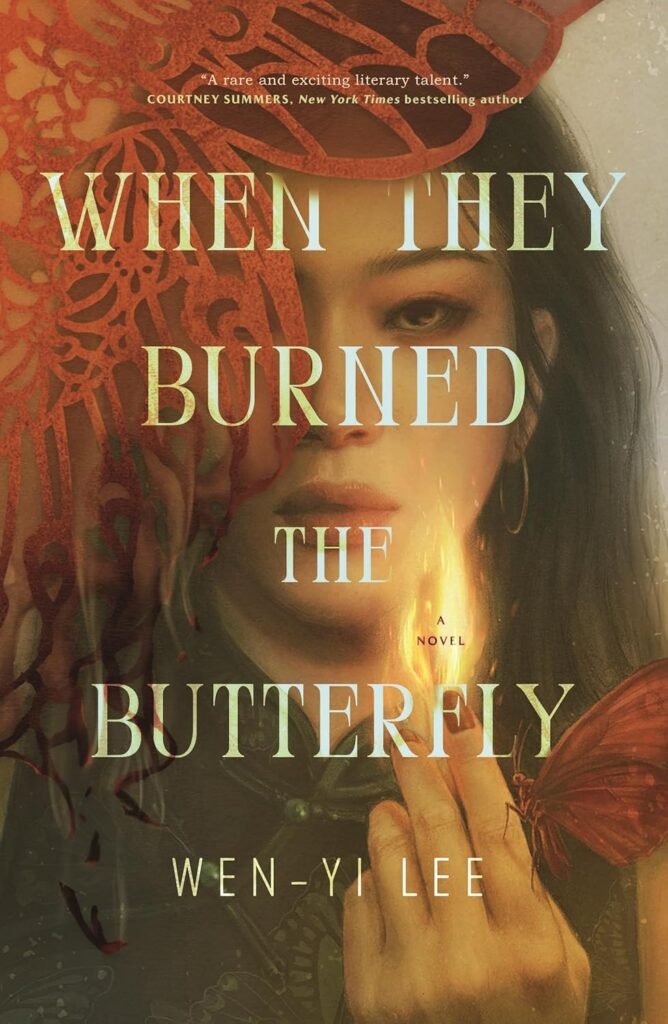
When They Burned the Butterfly: A Mixed Flutter of Emotions
“When They Burned the Butterfly” by J. C. Lee had me buzzing with excitement right from the moment I laid eyes on its cover. The intriguing title, the buzz surrounding its release, and the promise of a fierce, unapologetic heroine had my expectations soaring. Ah, the thrill of discovering a new voice in the literary world! But as I dove into the pages, I found myself grappling with a blend of admiration and frustration that left me pondering long after I finished.
Let’s talk about Adeline, our feisty protagonist. Now there’s a character who knows what she wants and isn’t afraid to shake things up. Described as a “bitch” by some, I find that to be a compliment in the realm of character development. Give me more unlikable heroines who possess as much determination as they do scorn! Adeline is formidable, burning bright with fierce ambition and a spirit that seems built for chaos and rebellion—everything I was hoping she would be. However, the thrilling premise that unfolds around her—a world where various criminal gangs draw powers from an array of gods and spirits—begins to feel, as the story progressed, a tad simplistic. I craved more depth: What makes a god? Where do these connections originate? Adeline’s unique bond with the Butterfly goddess had potential for richer exploration, but the book felt somewhat constrained in that arena, especially as I approached the end.





Now on to a key element: the prose. Here’s where my excitement stumbled. I’ve come to realize I might be hyper-aware of prose rhythm; what flows seamlessly for most can often feel clunky to me. And “When They Burned the Butterfly” had its fair share of jarring moments that disrupted my reading flow. It’s painful to admit this, especially acknowledging that many readers might read past the awkward phrasing without a second thought. There were flashes of beauty in the writing, particularly in Adeline’s moments of Sapphic awakening, which stirred something profound within. However, they were overshadowed by moments of confusion, where word combinations felt off-kilter. For example, the line about the street smelling “sweet of burning chrysanthemums” did convey meaning, yet I couldn’t help but think it required a grammar check. Such misalignments detracted from my reading experience.
As I progressed, I found my eagerness waning. I’ll admit, I skipped ahead to read the ending, hoping for a satisfying payoff, but instead encountered a resolution that danced along the edges of ambiguity, leaving me unsatisfied. The potential for an expansive narrative was there, but it felt stifled, as if the author were forced to compress ideas into a space that couldn’t fully contain them.
Ultimately, my journey with When They Burned the Butterfly led me to a DNF (Did Not Finish). Despite my struggles, I recognize that many early reviewers have fallen in love with this novel, and I genuinely hope it finds success. Adeline’s character deserves more exploration, and I’m curious to see if others find something magical that I couldn’t. For readers who are fans of complex, imperfect heroines and enjoy unique settings, this book might still be a delightful leap into a realm of gods and rebellion.
In conclusion, while my experience was frustrating—and I hope I don’t sound entirely sour—it’s crucial to remain open to different tastes. I relish hearing about the characters and stories that resonate most with others, as every reader’s journey is distinct. And who knows? Perhaps you’ll flutter through its pages with greater ease than I did! Happy reading!
Discover more about When They Burned the Butterfly on GoodReads >>