
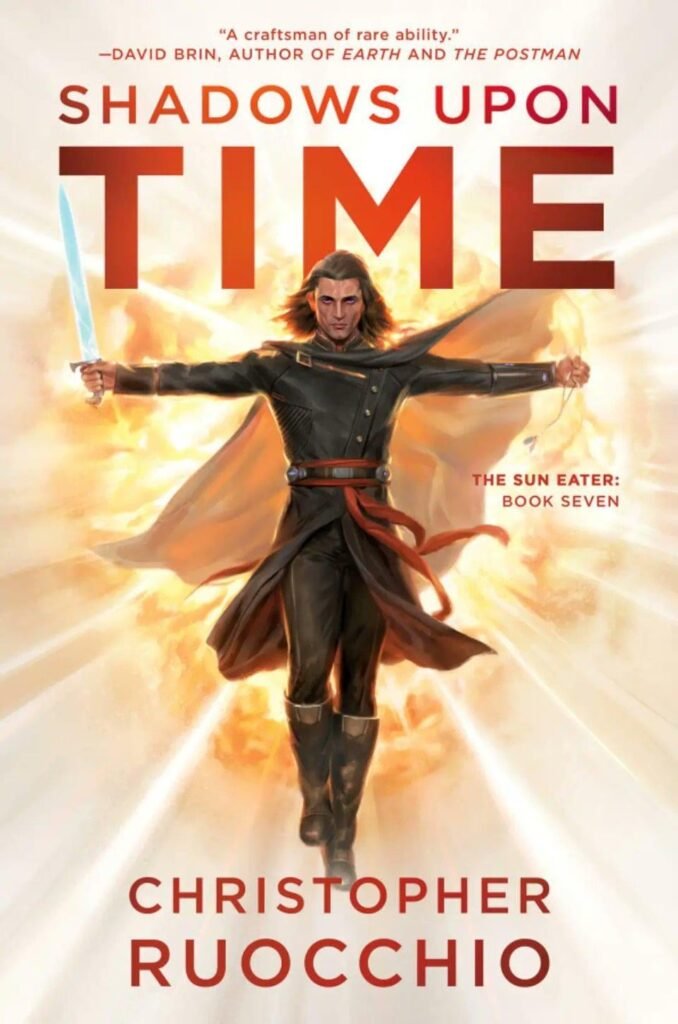
Shadows Upon Time: A Journey Worth Undertaking
When I first picked up Shadows Upon Time, the seventh installment in Christopher Ruocchio’s The Sun Eater series, I thought I knew what to expect. With each book having ventured deeper into Hadrian’s universe, I anticipated epic battles, rich world-building, and profound character development. But nothing could have prepared me for the whirlwind of emotions that Ruocchio masterfully orchestrates in this final entry.
From the moment I dove into this tome, I felt both excitement and trepidation. Many fellow fans have jokingly expressed envy over my early reading opportunity, and now I find myself echoing a sentiment: be careful what you wish for. This book is a heart-wrenching, thrilling rollercoaster that leaves you utterly spent by the end. I can assure you, no reader will escape unscathed—it’s a testament to Ruocchio’s prowess as a storyteller.
One of the standout qualities of Shadows Upon Time is how Ruocchio employs time and perspective in ways that reflect not only Hadrian’s journey but also the series’ overarching themes of consequence and destiny. Every plot twist feels ingeniously crafted, and with its whopping 100,000 words more than its predecessors, this finale profoundly connects back to the entire narrative fabric of the series. It genuinely felt like a crescendo that celebrated every thread woven in the prior books while introducing fresh perspectives.
The characters truly shine in this installment, with Hadrian’s interactions proving more impactful than ever. Side characters like Cassandra, Lorian, and Olorin displayed remarkable depth, as Ruocchio highlights their pivotal roles in the unfolding drama. Their arcs are not just mere backdrops; they drive the narrative with emotional weight that had me invested in their fates. The relationships are rich and layered, a beautiful reflection of Ruocchio’s evolution in character development throughout the series.
I was particularly captivated by the pacing, which felt impeccably balanced—taking us through stunning action sequences while also pausing for those intimate character moments that define the series. The two-part structure of the second act builds anticipation and tension, grounding the more fantastic elements of the plot in heartfelt struggles and complex character relationships.
While I won’t divulge into specific plot points, I must mention the sheer unpredictability of the climax at Gododdin; it’s a sequence that redefines stakes in a universe already laden with them. Trust me, you won’t see half of what’s coming, and when it hits, it’s as exhilarating as it is devastating.
By the end, I was left reflecting on the intricate tapestry Ruocchio has crafted, filled with layers that now resonate more profoundly after this read. Shadows Upon Time isn’t just an ending; it’s a celebration of the journey, an emotionally charged conclusion that calls upon every facet of Hadrian’s odyssey.
In conclusion, I genuinely believe that fans of The Sun Eater will find this book not just competent but brilliantly executed. It’s an experience that showcases Ruocchio’s evolution as a writer while simultaneously delivering what I suspect many readers, especially those who embraced the complexities of earlier entries, will deem a satisfying closure. If you’ve ever been invested in Hadrian’s journey, prepare yourself; you are in for a read that will echo in your thoughts long after the last page.
So grab a copy, lock yourself in, and allow the world of Shadows Upon Time to envelop you—you won’t regret the ride.
Discover more about Shadows Upon Time (The Sun Eater, #7) on GoodReads >>