
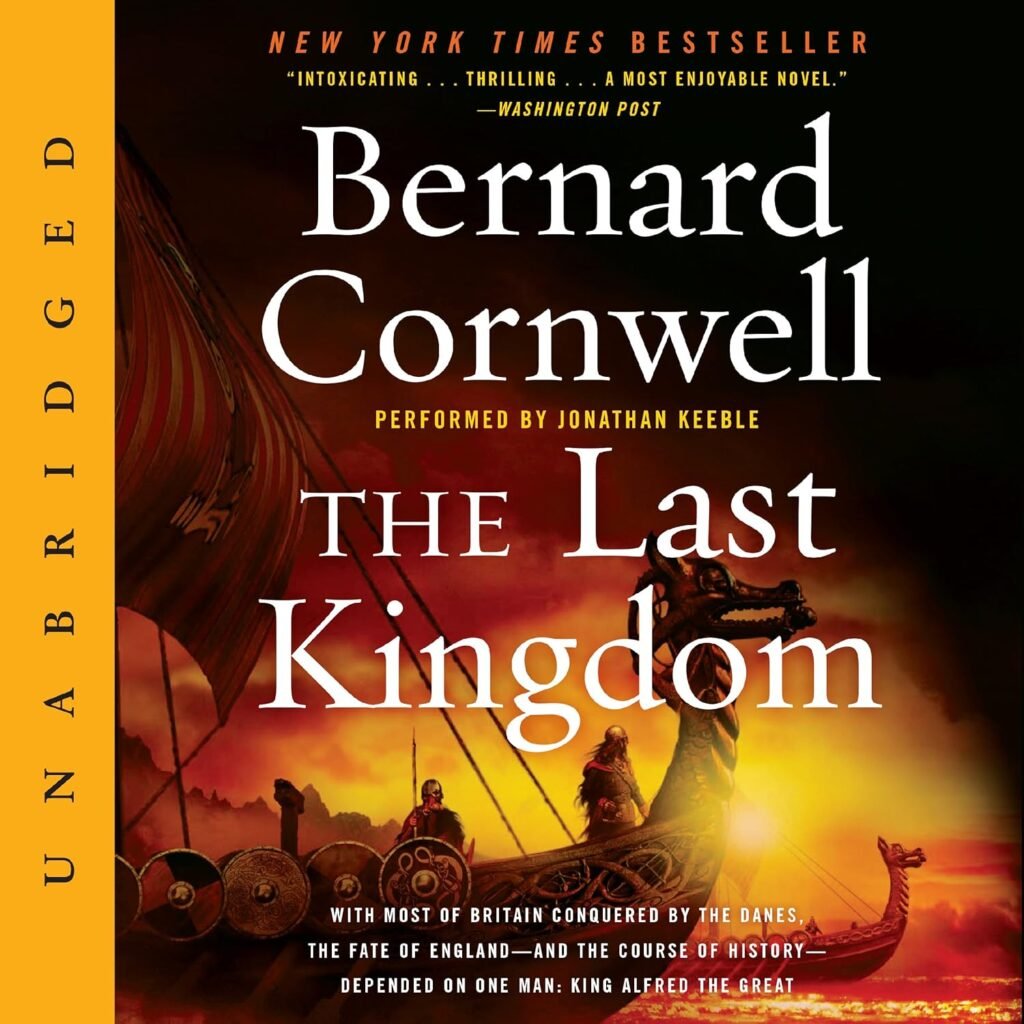
A Journey Through Time: My Reflection on The Last Kingdom
When I first picked up The Last Kingdom by Bernard Cornwell, I was intrigued not only by the cover art but also by the promise of an epic tale set in the turbulent ninth and tenth centuries of England—a time when kingdoms were forged in the fires of war and the clashing of swords. I’ve always had a penchant for historical fiction, but Cornwell’s unique storytelling drew me in like a moth to a flame, and I quickly found myself engulfed in a world long past, yet eerily relevant.
At the heart of this gripping narrative is Uhtred of Bebbanburg, a young nobleman whose life takes a dramatic turn when he is captured by Danish invaders. Raised among them, Uhtred’s identity is a fascinating exploration of loyalty, belonging, and the complexities of cultural identity. On one hand, he grapples with the weight of his noble lineage and his desire to reclaim his ancestral home; on the other, he feels an almost intrinsic kinship with the Vikings, who become a surrogate family to him. This duality presents a profound exploration of loyalty and the often-painful choices that define us.
Cornwell deftly intertwines the personal struggles of Uhtred with broader themes of national identity and the formation of England itself. His portrayal of King Alfred, depicted as a pious yet formidable ruler, offers a contrast to Uhtred’s more rugged warrior ethos. The tension between these two characters—one who embodies the Christian ideals of law and order, and the other who is driven by a warrior’s code—creates an engaging dynamic that kept me turning the pages. Readers witness how Uhtred’s disdain for Alfred subtly transforms as the narrative unfolds, culminating in moments that highlight the themes of destiny and duty.




What struck me most about Cornwell’s writing is his ability to create an immersive experience. His vivid descriptions transport you to the rain-soaked fields of Wessex and the fierce battles that shaped the destiny of a nation. The pacing is exhilarating; one minute I was breathing in the stillness before conflict, and the next, I was swept away in the chaos of a shield wall. Cornwell has a knack for brisk, yet richly detailed prose, ensuring that every skirmish feels visceral and immediate.
One memorable quote resonated deeply with me: “Destiny is all.” This encapsulates Uhtred’s tumultuous journey, reminding us that our paths are shaped by choices, fate, and sometimes forces beyond our control. It’s a sentiment that lingers long after the last page is turned.
The Last Kingdom isn’t just for fans of historical fiction—it’s a timeless tale that speaks to anyone who has ever faced a crossroads in their lives. It’s perfect for readers who enjoy complex characters, intricate plots, and the thrilling uncertainties of history.
Reflecting on my own reading experience, I found myself not only entertained but also enlightened about a period I previously knew little about. Cornwell’s novel opened a door to insights about culture, conflict, and identity, making it a profound read that resonates on multiple levels. Whether you’re an avid history buff or simply looking for an engaging tale filled with adventure and inner conflict, The Last Kingdom is a must-read that will leave you eagerly reaching for its sequels.
In a world that often feels fragmented, Uhtred’s journey toward unity—both within himself and within his country—offers a hopeful reminder of the possibilities that lie ahead, if only we dare to embrace our own destinies.
You can find The Last Kingdom here >>